
PROJECT / COMMERCIAL
100 Park Avenue
At the time of its construction in 1949, 100 Park Avenue was the tallest and most expensive post-war office building in New York City and the first one in the Grand Central District since the early 1930s. 70 years later, it was under-performing, depending on obsolete building systems. Charged with managing an ambitious transformation, MdeAS combined form and function by simultaneously overhauling the building's aesthetics and core building systems while the building remained fully occupied. The building has since earned LEED Silver certification. In addition to the full tower transformation, a new double-height lobby and glass storefronts redefined how the building meets the neighborhood at the street level and created a dynamic retail transparency.
Address 100 Park Avenue
City New York, NY
Year 2009
Size 825,000 sq ft
Client SL Green Realty Corp.
Awards
BUILDING OWNERS AND MANAGERS ASSOCIATION | Best Earth Building of the Year, Nominee, 2023
ZEROFOOTPRINT | The Re-Skinning Award, Finalist, 2010
PERSPECTIVE NEW YORK | Green Building Award, 2009
BUILDING OWNERS AND MANAGERS ASSOCIATION | International Building of the Year - Renovated Building, 2009
BUILDING OWNERS AND MANAGERS ASSOCIATION | Atlantic Region Building of the Year - Renovated Building, 2009
BUILDING OWNERS AND MANAGERS ASSOCIATION | New York State Building of the Year - Renovated Building, 2009
Two Faces of Park Avenue
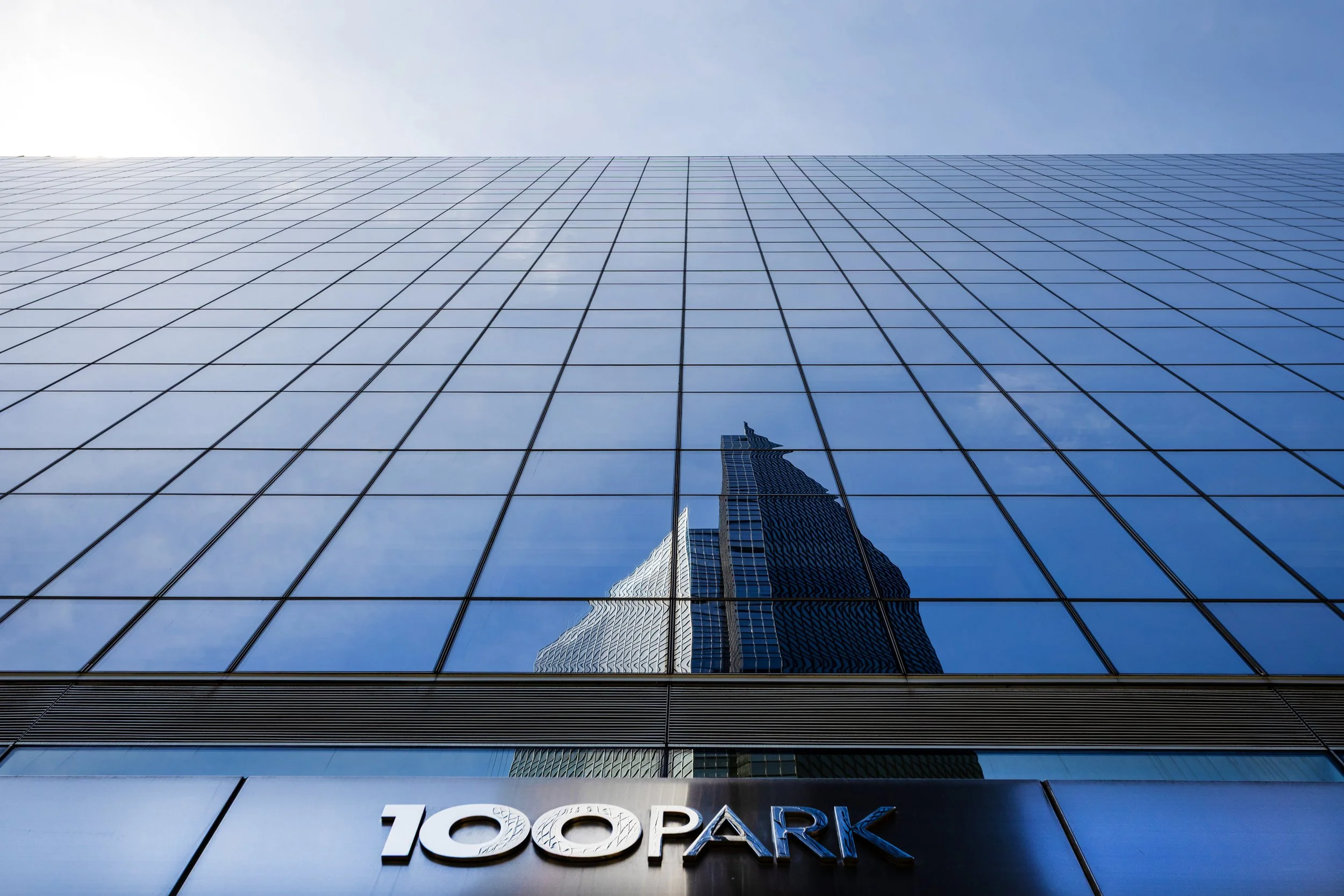
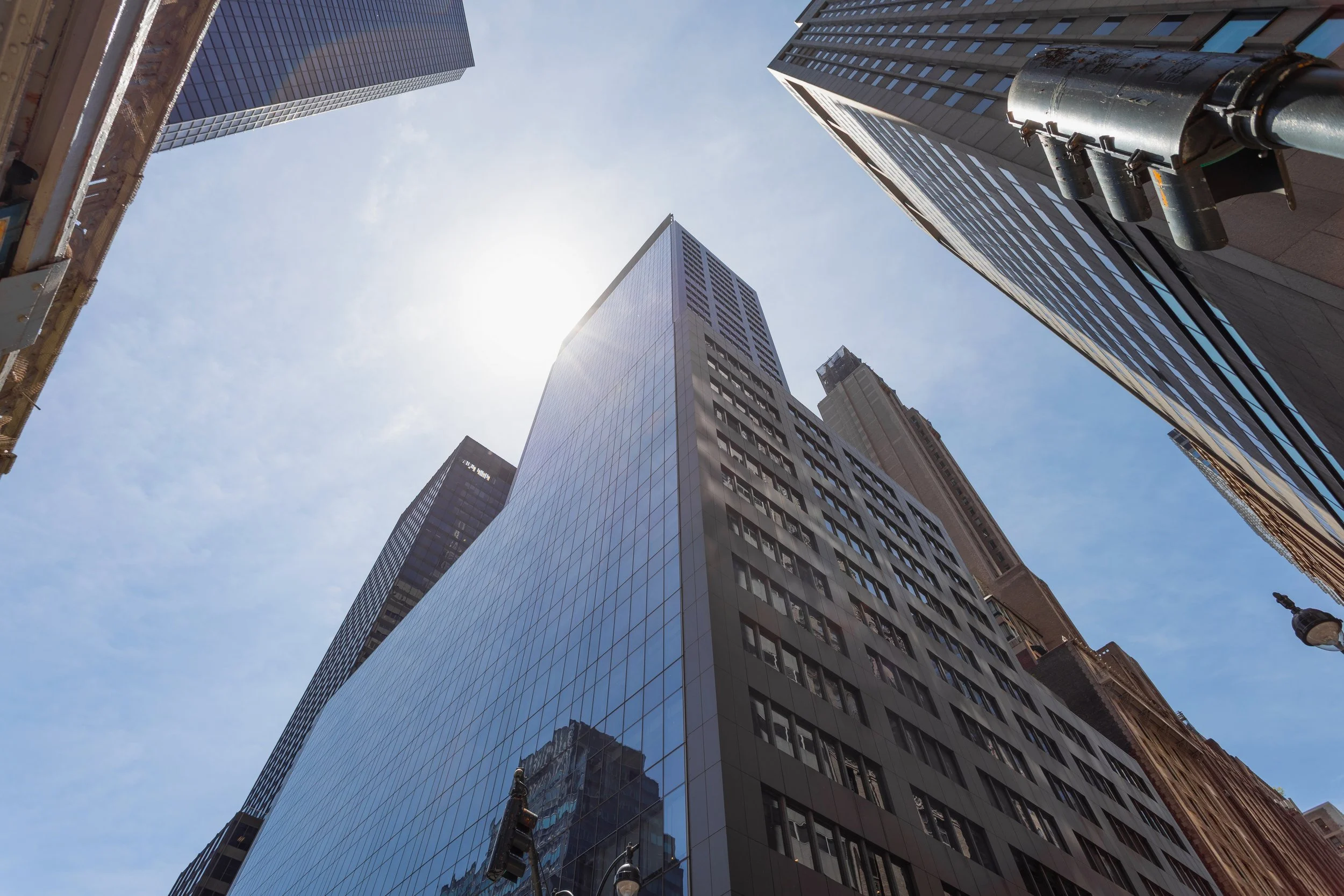
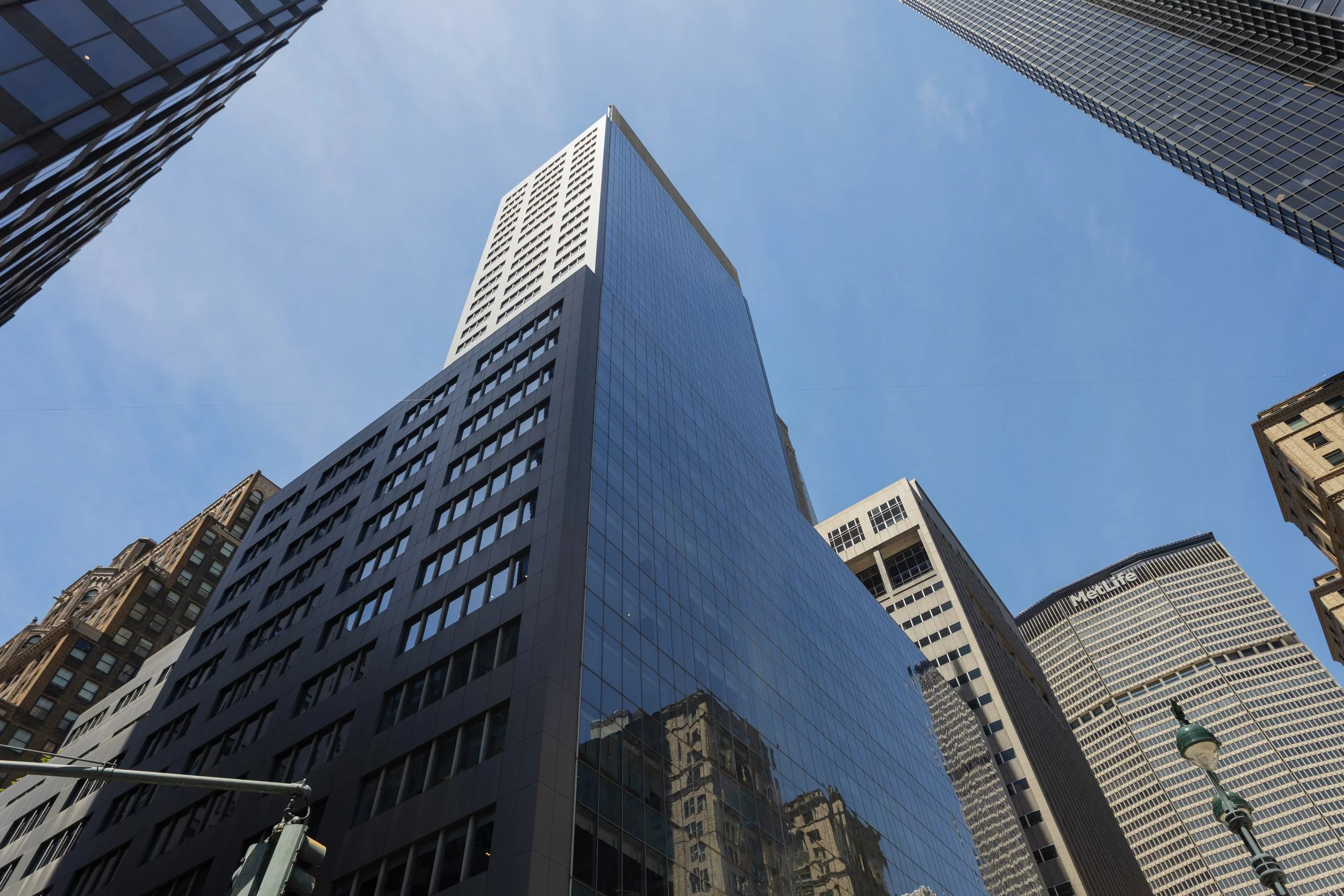
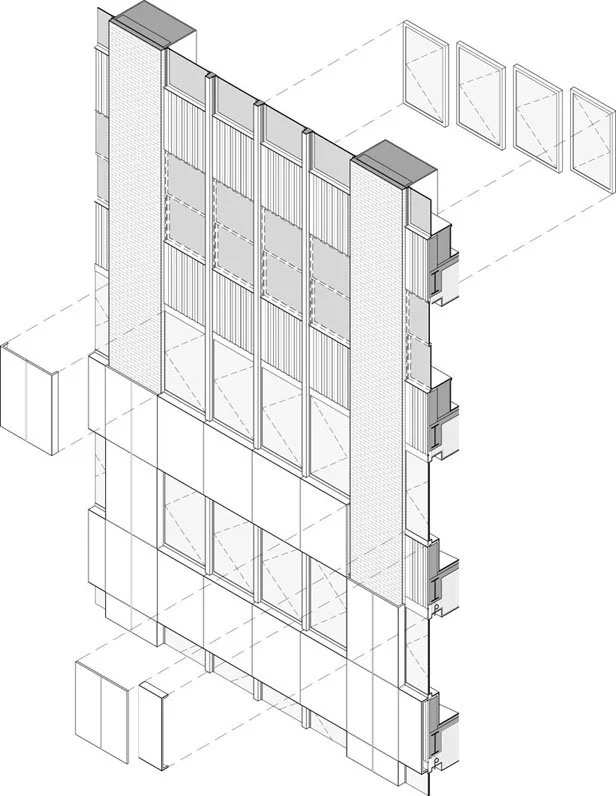
The new exterior design features two distinct systems: 1) a unitized glass curtain wall facing Park Avenue, and 2) aluminum composite metal panels with punched windows on the north and south facades. In order to balance cost, performance, and overall aesthetics, the sleek, unitized curtainwall was used only to present the building’s best face along Park Avenue. On the north and south, a full window replacement and new insulated metal cladding created a handsome bookend effect while maintaining a fully sealed thermal envelope.

Transformed While Fully Occupied
The building remained fully occupied during the over-cladding process, which demanded the utmost precision in design and execution. The new curtain wall design utilized the space within the original oversized steel channels to install a new anchoring system in front of the original facade. The original windows were subsequently removed from the interior during off-hours, and the vision openings were then trimmed with a new aluminum enclosure to complete the interior face of the system. The original masonry on the north and south facades was overclad with a new aluminum panel system, and the windows were replaced with new thermally broken in-swing casement windows.